
Restore and Protect Your Smile with a Custom Dental Crown
A damaged, cracked, worn, or weakened tooth does not always need to be removed. A custom dental crown can restore the strength, shape, appearance, and function of your natural tooth while helping protect it from further damage.
At W Plus Dental in Washington, DC, we provide custom dental crowns designed to look natural, feel comfortable, and blend beautifully with your surrounding teeth. Whether you have a broken tooth, a large cavity, an old restoration that needs replacement, or a tooth that has undergone root canal treatment, our team can determine whether a crown is the right solution for your smile.
If you are searching for a dentist for dental crowns in Washington, DC, W Plus Dental provides personalized restorative dentistry with careful attention to both function and aesthetics. Schedule a consultation today!
A dental crown is a custom-made restoration that completely covers a damaged or weakened tooth. Often called a "cap," a crown restores the tooth's shape, strength, appearance, and function while protecting it from further damage.
Dental crowns are commonly used when a tooth is too damaged for a filling but can still be saved. At W Plus Dental, we use high-quality ceramic and porcelain crowns that closely mimic the appearance of natural teeth.
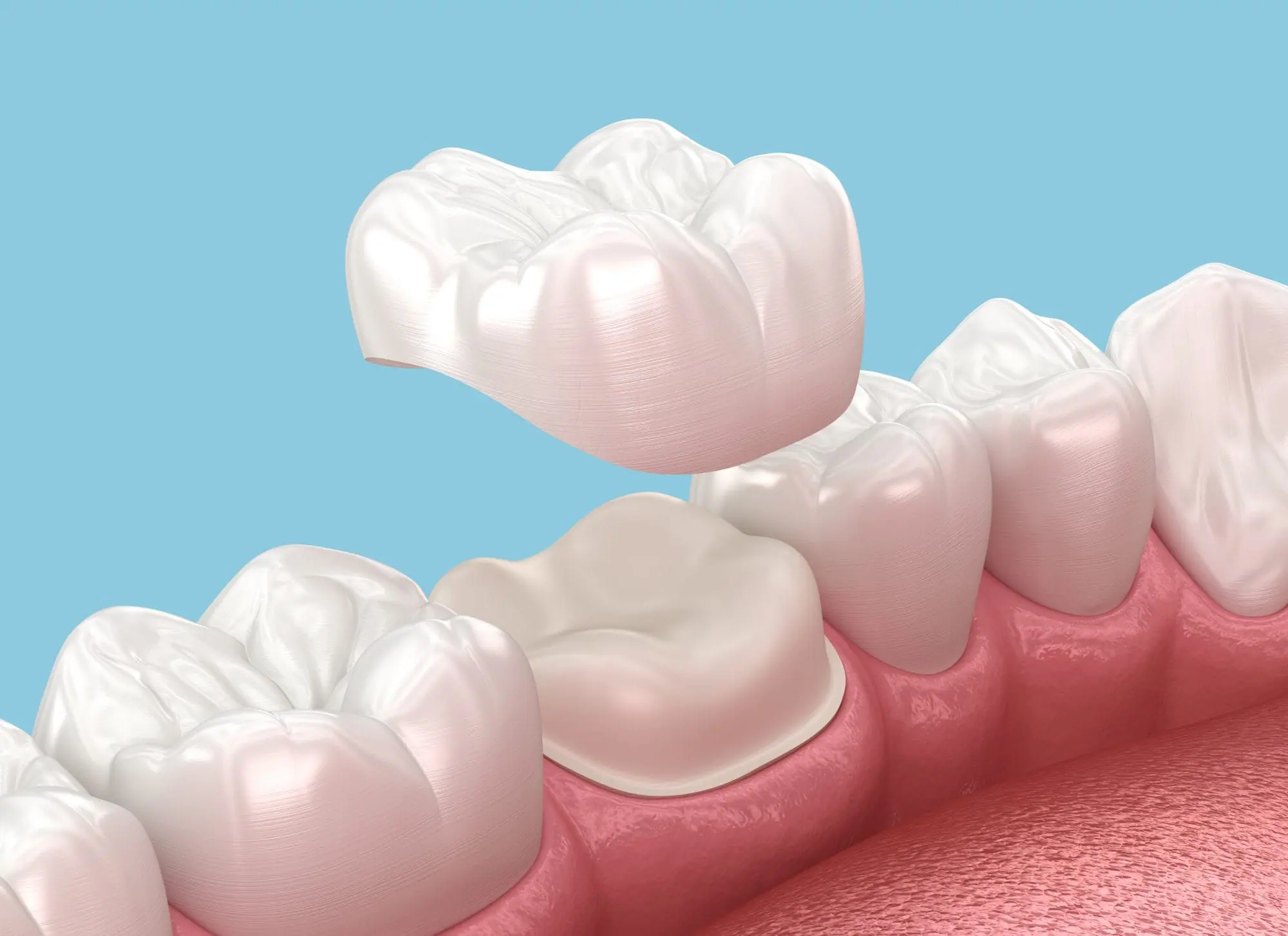
Not every damaged tooth needs a crown. Smaller areas of decay may be repaired with a tooth-colored dental filling, while teeth with more significant structural damage may require the additional protection of a crown. We may recommend a dental crown if you have:
When tooth decay has damaged a significant portion of the tooth, there may not be enough healthy structure remaining to securely support a filling. A crown can cover and protect the remaining tooth.
A cracked tooth can continue to weaken over time. A dental crown for a cracked tooth helps hold the tooth together and protect it during chewing.
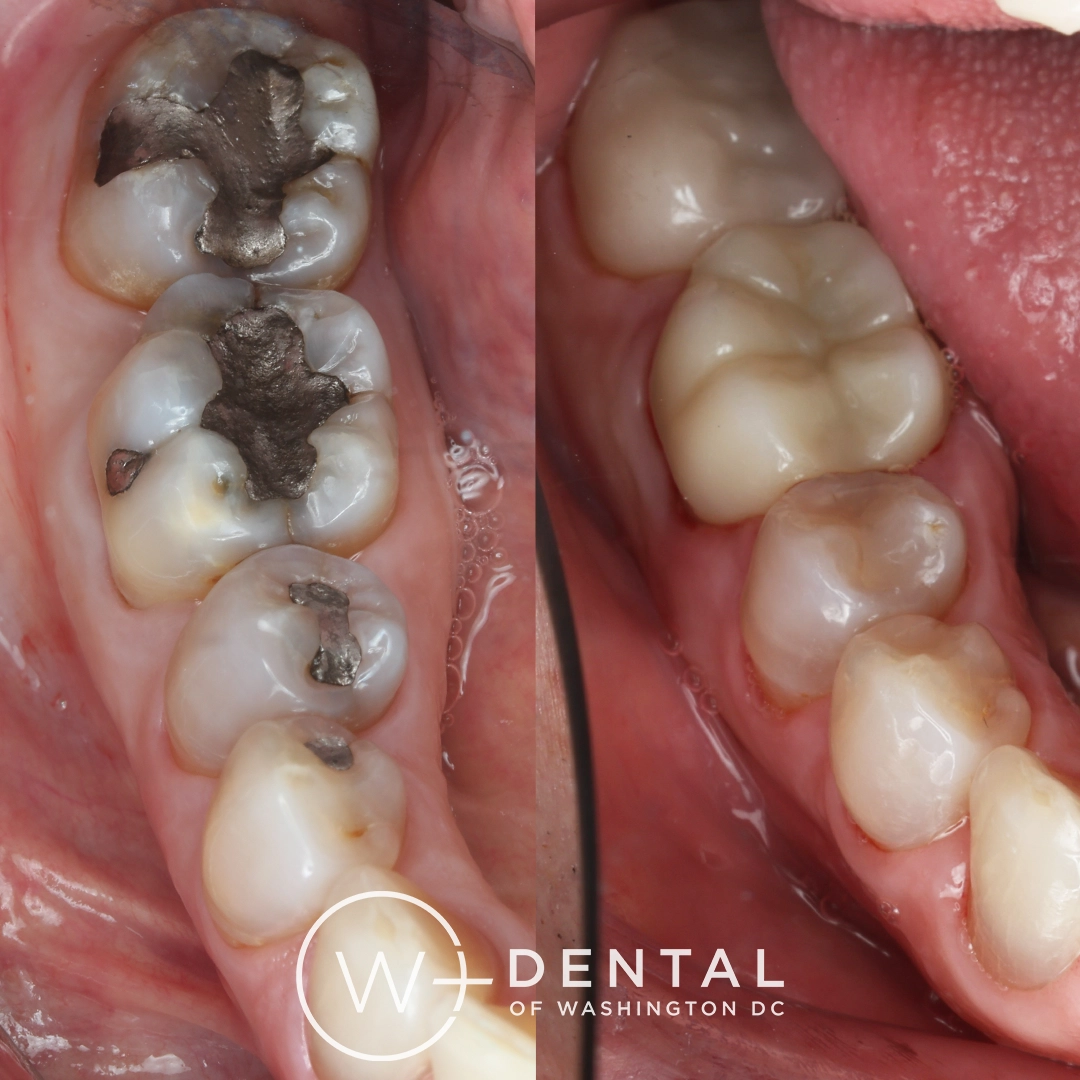
Large fillings can leave the remaining natural tooth structure thin and vulnerable to fracture. Replacing a large restoration with a crown may provide additional long-term protection.
Teeth damaged by grinding, clenching, bite problems, or years of wear may benefit from crowns that rebuild their natural size and shape.
Teeth that have undergone root canal therapy may become more vulnerable to fracture. A crown is often used to protect and restore the tooth afterward.
Dental crowns may also be used for cosmetic reasons when the shape, size, or color of a tooth requires more extensive correction than bonding or whitening can provide.
A dental crown can also serve as the visible replacement tooth attached to a dental implant.
Dental crowns provide both functional and cosmetic benefits. A properly designed crown can:
• Strengthen a weakened or damaged tooth
• Protect a cracked tooth from additional damage
• Restore normal chewing function
• Rebuild worn or broken teeth
• Improve tooth shape and size
• Improve the appearance of discolored teeth
• Replace large or failing fillings
• Restore teeth after root canal treatment
• Complete a dental implant
• Create a more balanced, natural-looking smile
Because every smile is different, we customize your treatment based on the condition of your tooth, your bite, and your cosmetic goals.
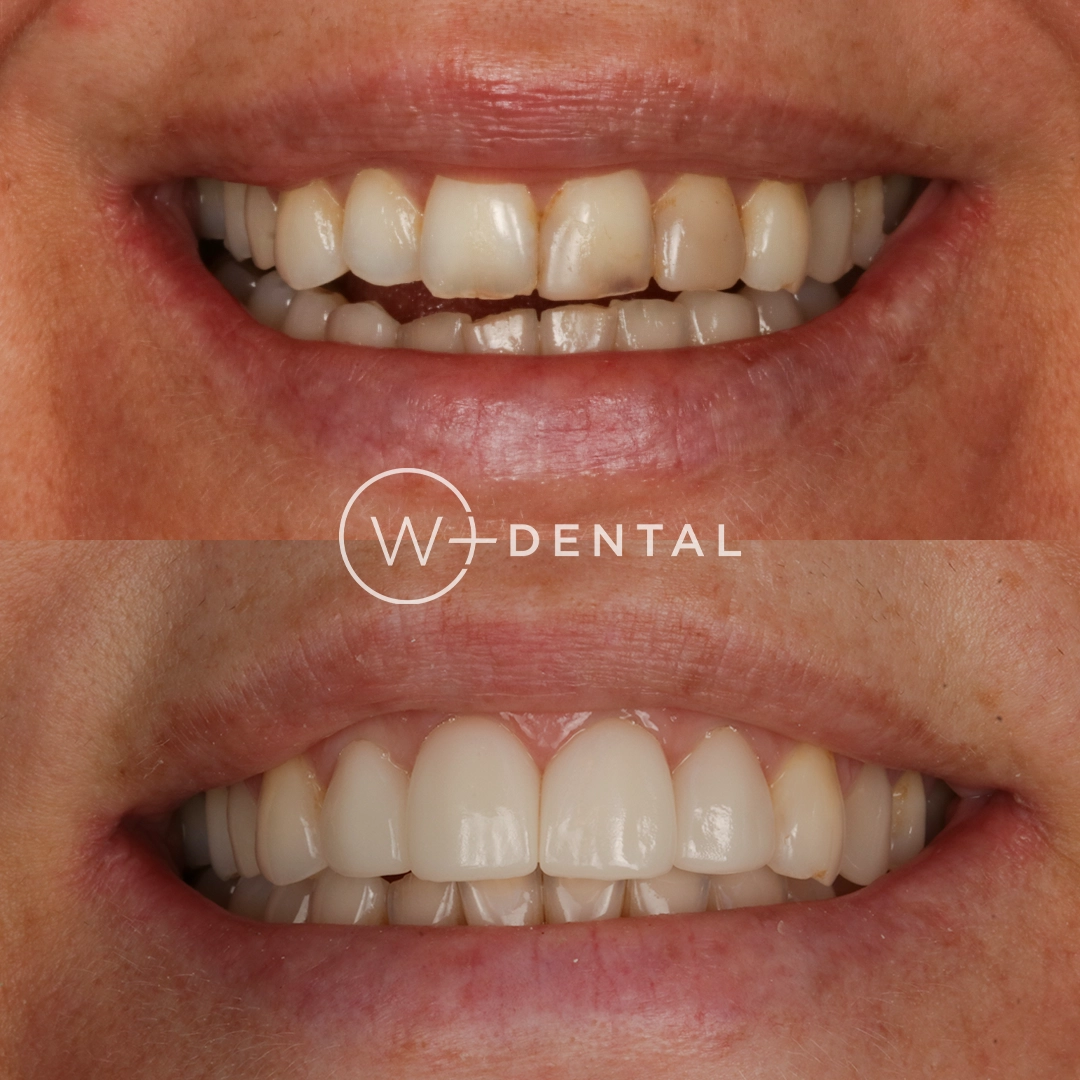
Wondering what a dental crown can do for your smile? Visit our Before & After Gallery to see real patient transformations completed at W Plus Dental!
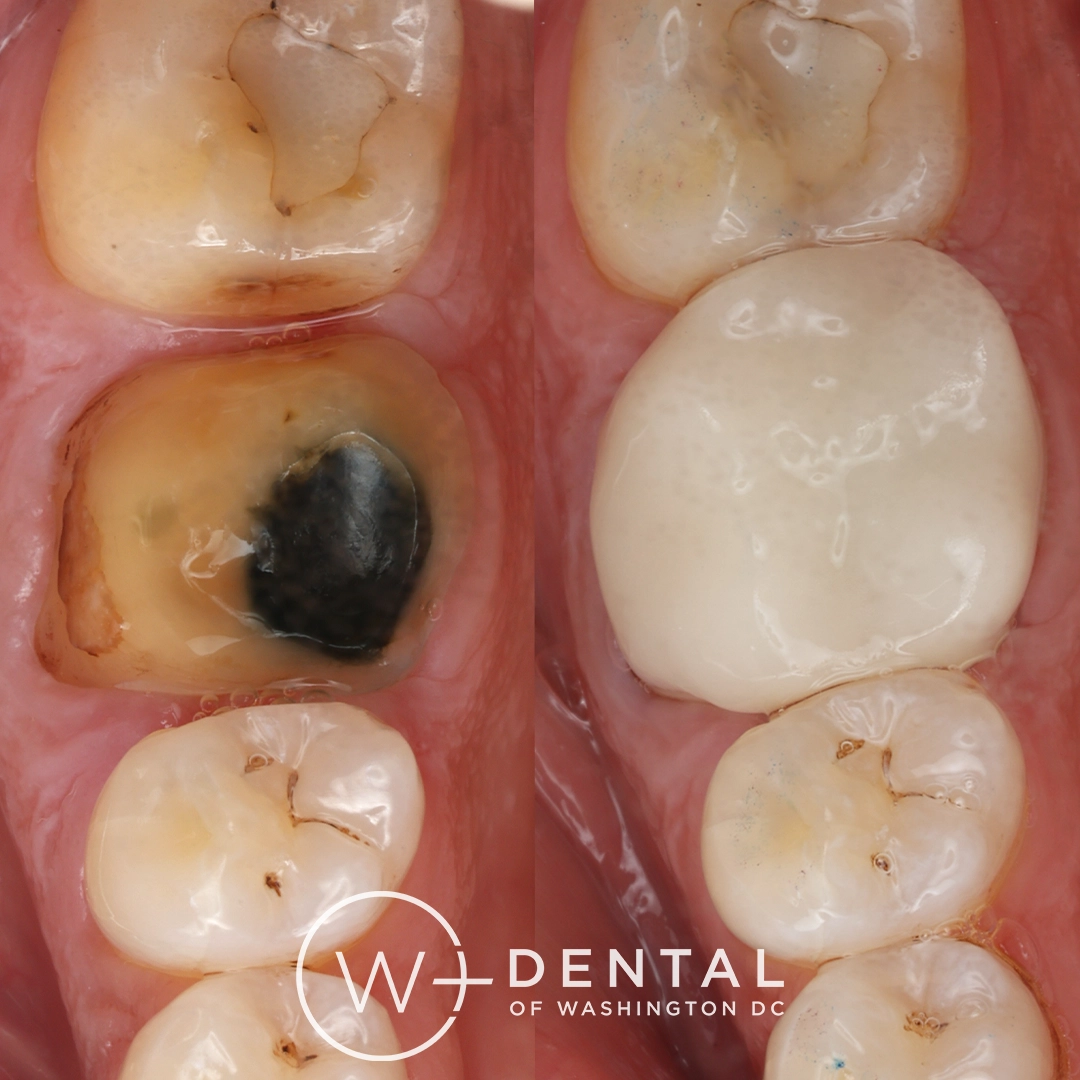
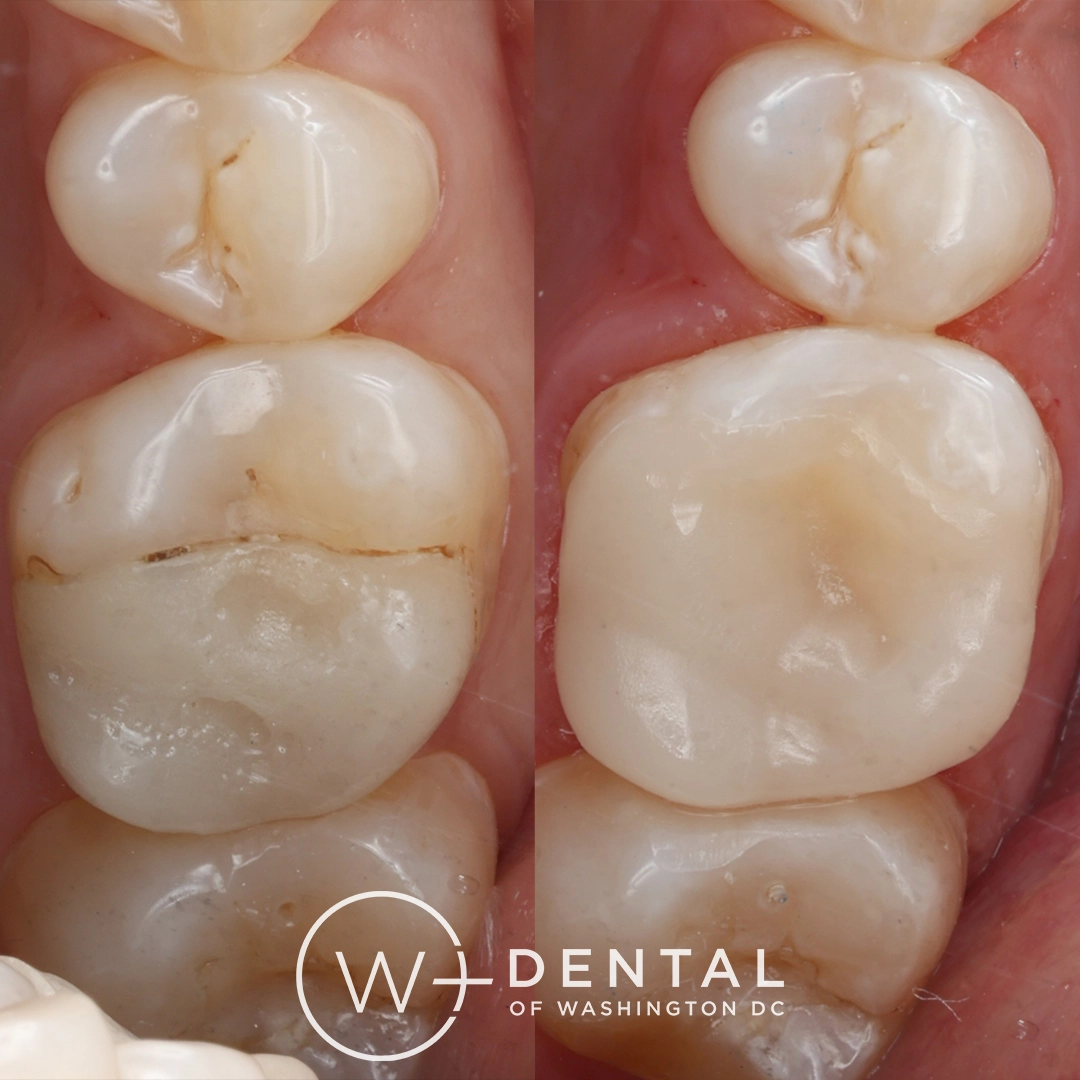
Your dentist will examine your tooth and take digital X-rays to determine whether a crown is the best treatment option.
The damaged or weakened portion of the tooth is carefully prepared to create space for the crown.
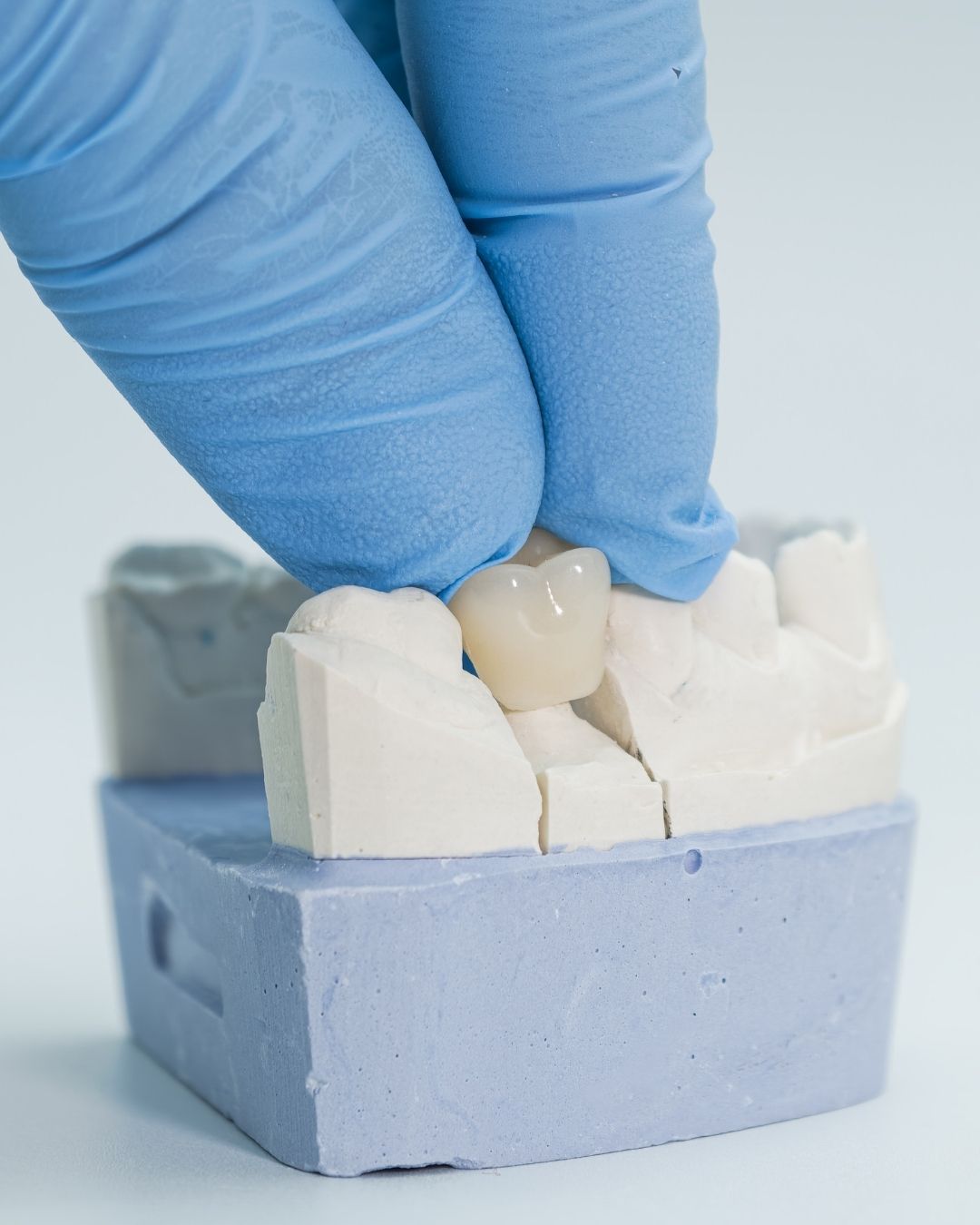
We use modern digital technology to capture highly accurate impressions for a precise fit. Your crown is custom-made to match the shape, size, and color of your natural teeth.
Once your crown is ready, it is securely bonded into place and adjusted for optimal comfort and function.
One of the most common questions we hear is whether a damaged tooth needs a filling or a crown.
A dental filling is typically used when tooth decay is small to moderate and there is still enough strong, healthy tooth structure to support the tooth. The decayed portion is removed and replaced with a tooth-colored filling to restore the shape and function of the tooth.
When a cavity becomes larger or weakens a significant portion of the tooth, a filling may no longer provide enough strength or protection. In these situations, a dental crown may be recommended. A crown covers and protects more of the tooth, helping restore its strength, function, and appearance while reducing the risk of the weakened tooth breaking.
Choosing the appropriate treatment is important. During your examination at W Plus Dental, we can evaluate the tooth and explain why a filling, crown, or another treatment may be recommended.
--> Click to Watch Dr. Ku Explain The Difference Between a Filling and a Crown
Want to learn more about your treatment before your appointment? Visit our Video Gallery for helpful videos from our dental team covering procedures, recovery, oral health, and frequently asked questions.
Watch educational videos about dental implants, cosmetic dentistry, cavities, gum health, dental emergencies, TMJ treatment, restorative dentistry, and more!

Dental crowns can last for many years with proper care, although their lifespan depends on factors including:
-Oral hygiene
-Bite forces
-Teeth grinding or clenching
-Diet
-Crown material
-Location of the crown
-Condition of the underlying tooth
-Regular dental examinations and cleanings
Brushing twice daily, flossing around the crown, maintaining routine dental visits, and wearing a nightguard when recommended can help protect your restoration.
The crown itself cannot develop a cavity, but the natural tooth underneath it still can.
Decay may develop near the edge where the crown meets the tooth if plaque and bacteria accumulate in the area. For this reason, excellent oral hygiene and regular dental cleanings remain important even after receiving a crown.
Yes. In fact, dental crowns are one of the most common and effective treatments for cracked teeth.
When a tooth develops a crack, the remaining structure can flex under biting pressure, which may cause pain and increase the risk of further damage. A dental crown acts like a protective helmet around the tooth, helping hold it together and distribute biting forces more evenly.
If you're experiencing pain when chewing, temperature sensitivity, or have noticed a visible crack, it's important to schedule an evaluation as soon as possible. Early treatment can often prevent the crack from worsening and may help save the tooth.
A tooth that has been recommended for a crown is often already structurally compromised. Without treatment, the tooth may continue to:
-Crack
-Break
-Lose additional tooth structure
-Develop deeper decay
-Become painful
-Develop infection
-Eventually become impossible to restore
Treating the tooth before additional damage occurs may make it possible to preserve more of your natural tooth.
Yes. A dental crown is actually the visible portion of a dental implant restoration.
A complete dental implant consists of three components:
-The dental implant, which replaces the root.
-The abutment, which connects the implant to the crown.
-The custom dental crown, which replaces the visible tooth.
Dental implant crowns are designed to look, feel, and function like natural teeth. Patients throughout Washington, DC often choose dental implants because they provide one of the most stable and long-lasting solutions for replacing missing teeth.
Modern dental crowns can be made from several materials, but porcelain and ceramic crowns are among the most popular because they closely resemble natural tooth enamel.
Benefits of ceramic and porcelain crowns include:
-Excellent aesthetics
-Natural translucency
-Durable performance
-Metal-free construction
-Biocompatibility
Dr. John Ku carefully selects the appropriate crown material based on the location of the tooth, your bite forces, and your cosmetic goals. The goal is always to provide a restoration that is both beautiful and long-lasting.
If you have a cracked tooth, broken filling, large cavity, or damaged tooth, a dental crown may be the ideal solution to restore your smile and protect your oral health. At W Plus Dental, Dr. John Ku provides custom dental crowns designed for long-term strength, function, and aesthetics. Contact our Washington, DC dental office today to schedule your consultation and learn whether a dental crown is right for you.




We look forward to meeting you. Contact us today to schedule an appointment.
(202) 871-7473Contact@WPlusDental.comMonday-Thursday 8AM - 4PM
Friday8AM - 3PM