
Transform your smile with natural-looking, custom porcelain or composite veneers at W Plus Dental in Washington, DC. Whether you want to correct discoloration, worn teeth, chips, gaps, uneven tooth shapes, or several cosmetic concerns at once, veneers can create a brighter, more balanced, and confident smile.
Dr. John Ku is a veneers specialist in Washington, DC who combines advanced cosmetic dentistry, detailed treatment planning, and an artistic approach to smile design. Every veneer is customized to complement your facial features, natural teeth, gumline, and personal preferences.
For patients searching for a top veneers dentist in Washington, DC, W Plus Dental offers personalized smile makeover treatment in a modern, comfortable dental office. Our goal is not to give every patient the same “perfect” smile. It is to create a smile that looks naturally beautiful and uniquely yours.
Dental veneers are thin, tooth-colored coverings placed over the visible front surfaces of teeth. They can conceal cosmetic imperfections while improving the overall balance and appearance of your smile.
Veneers may be made from porcelain or tooth-colored composite resin. Both materials can produce beautiful results, but they differ in their treatment process, durability, stain resistance, cost, repairability, and the amount of tooth preparation that may be required.
During your consultation, Dr. Ku will evaluate your smile and explain whether porcelain veneers, composite veneers, or another cosmetic dental treatment is the best choice for you.
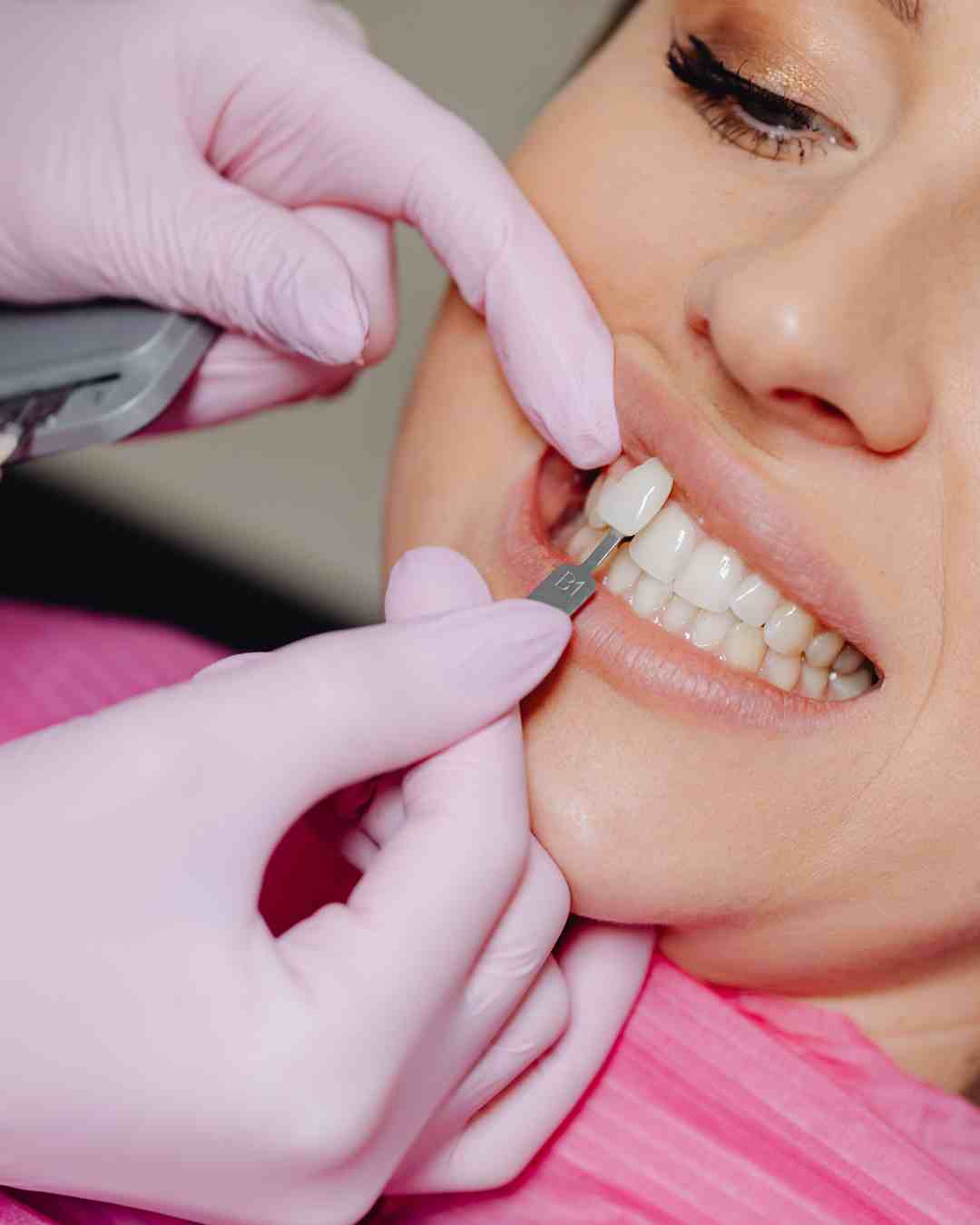
Wondering what Veneers can do for your smile? Visit our Before & After Gallery to see real patient transformations completed at W Plus Dental!
Click to Visit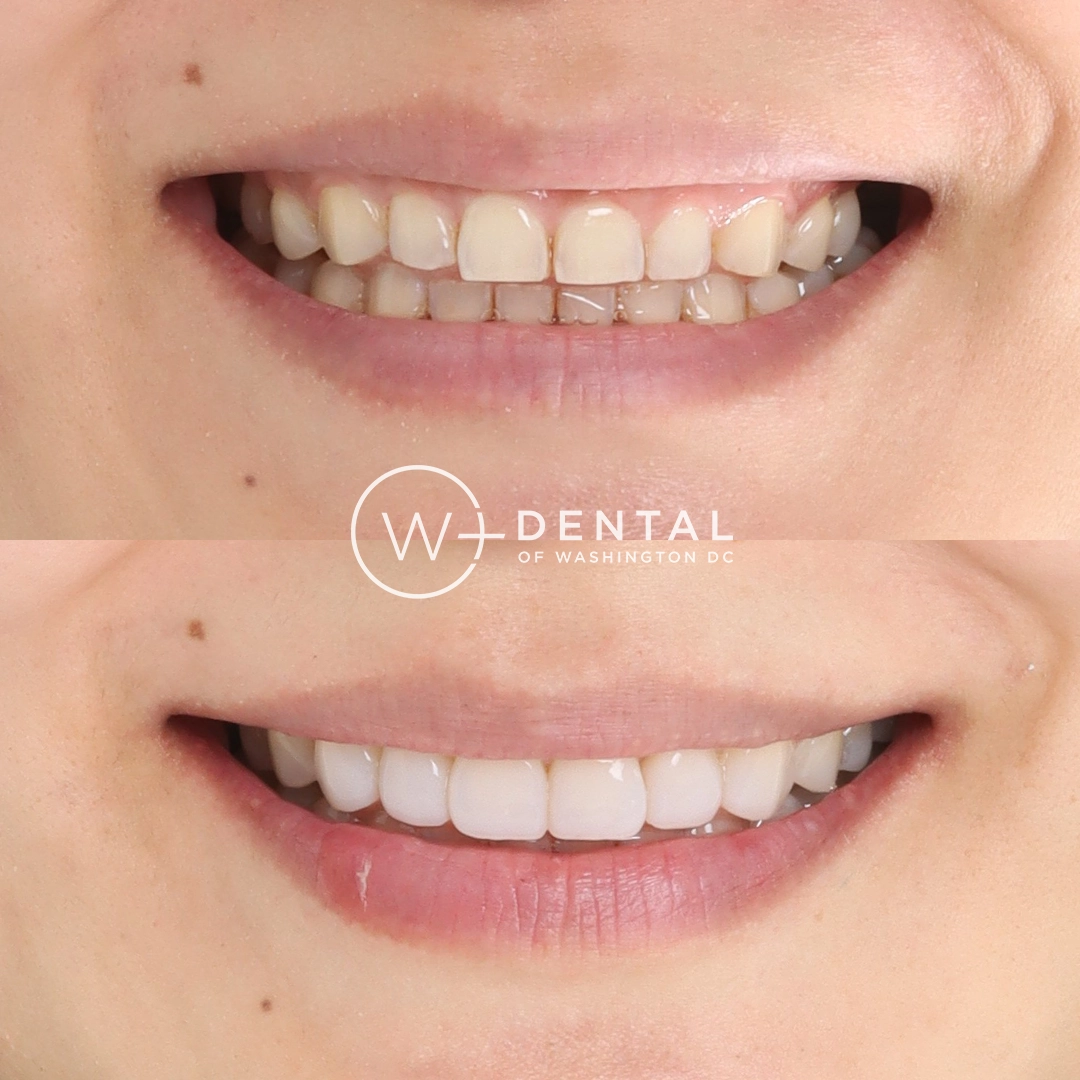
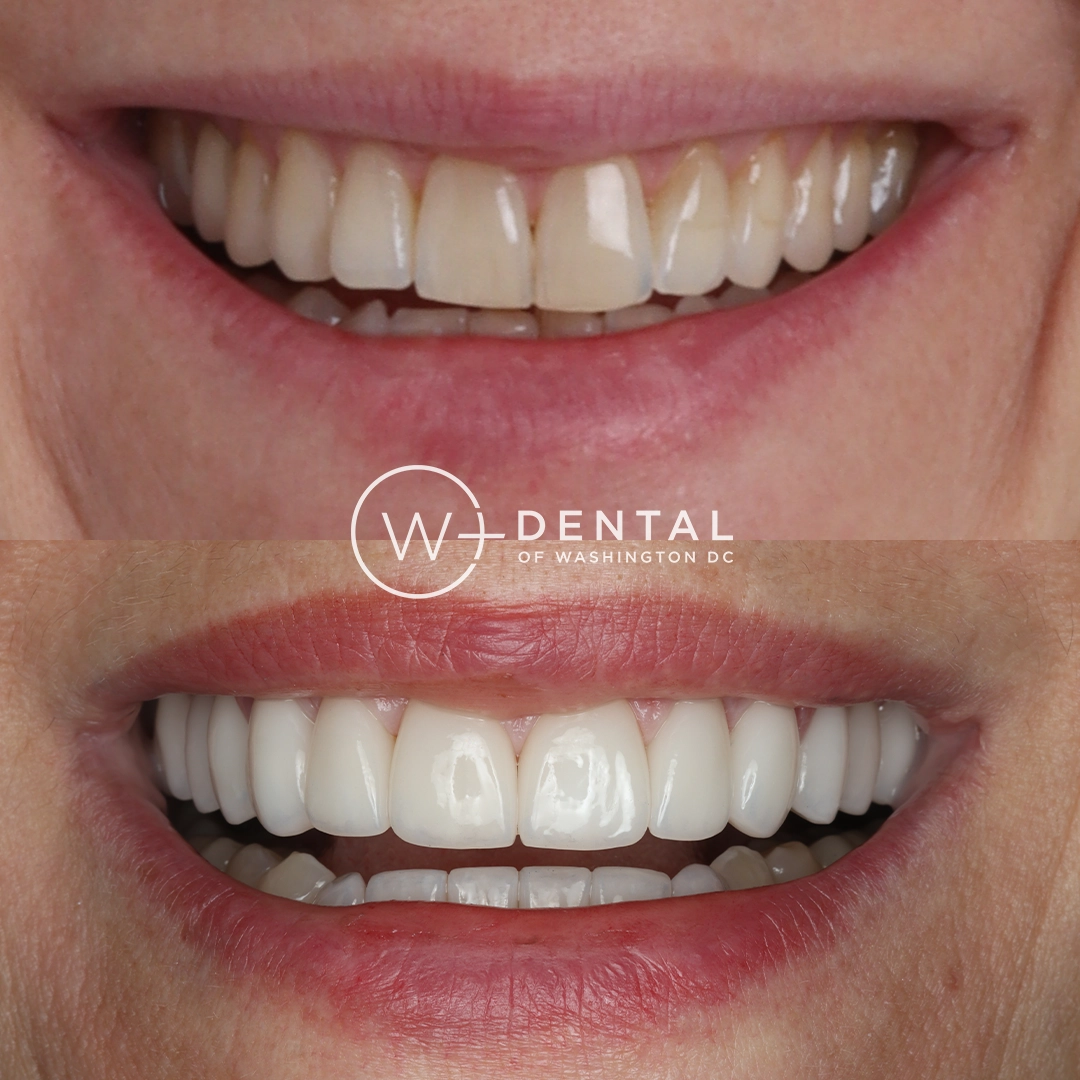
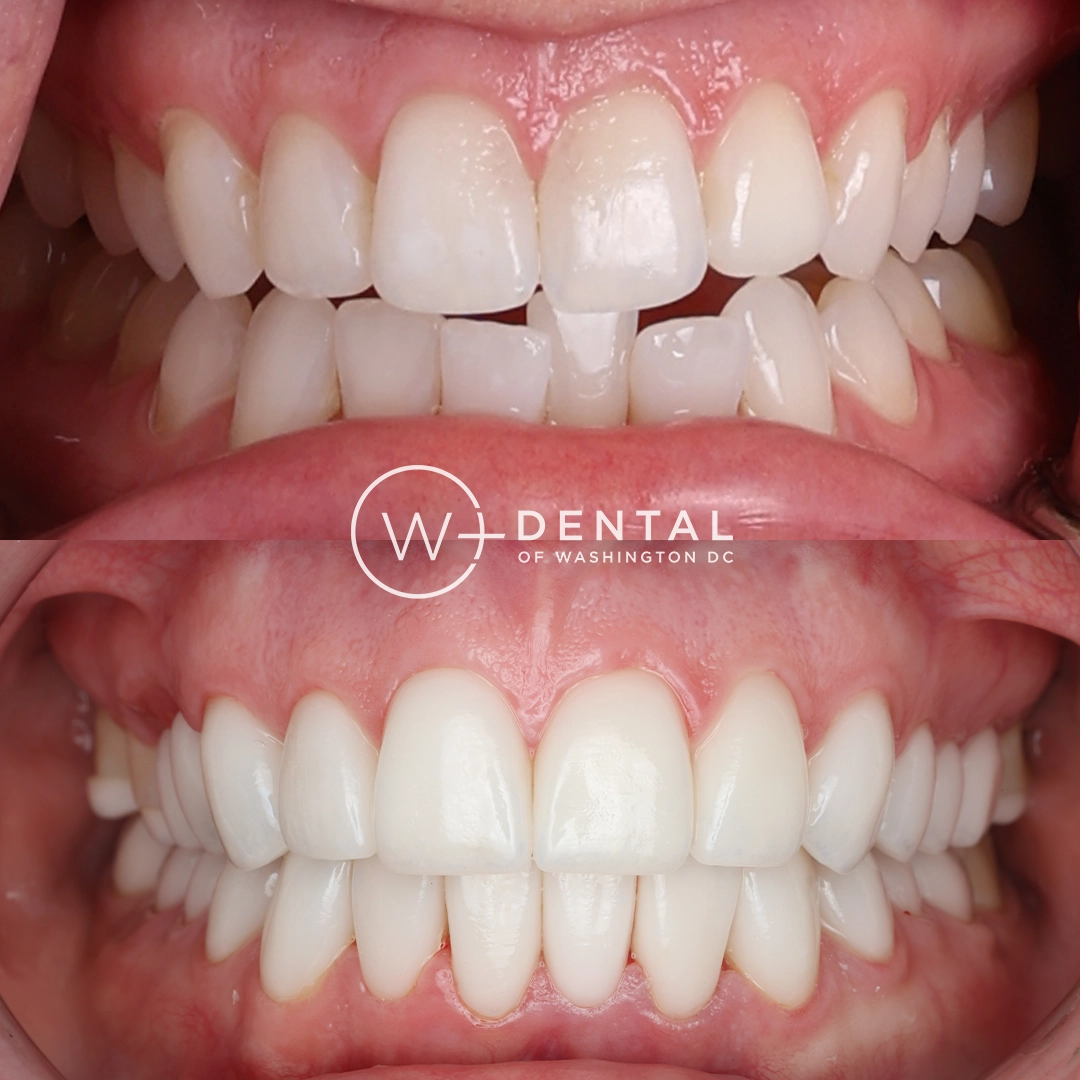
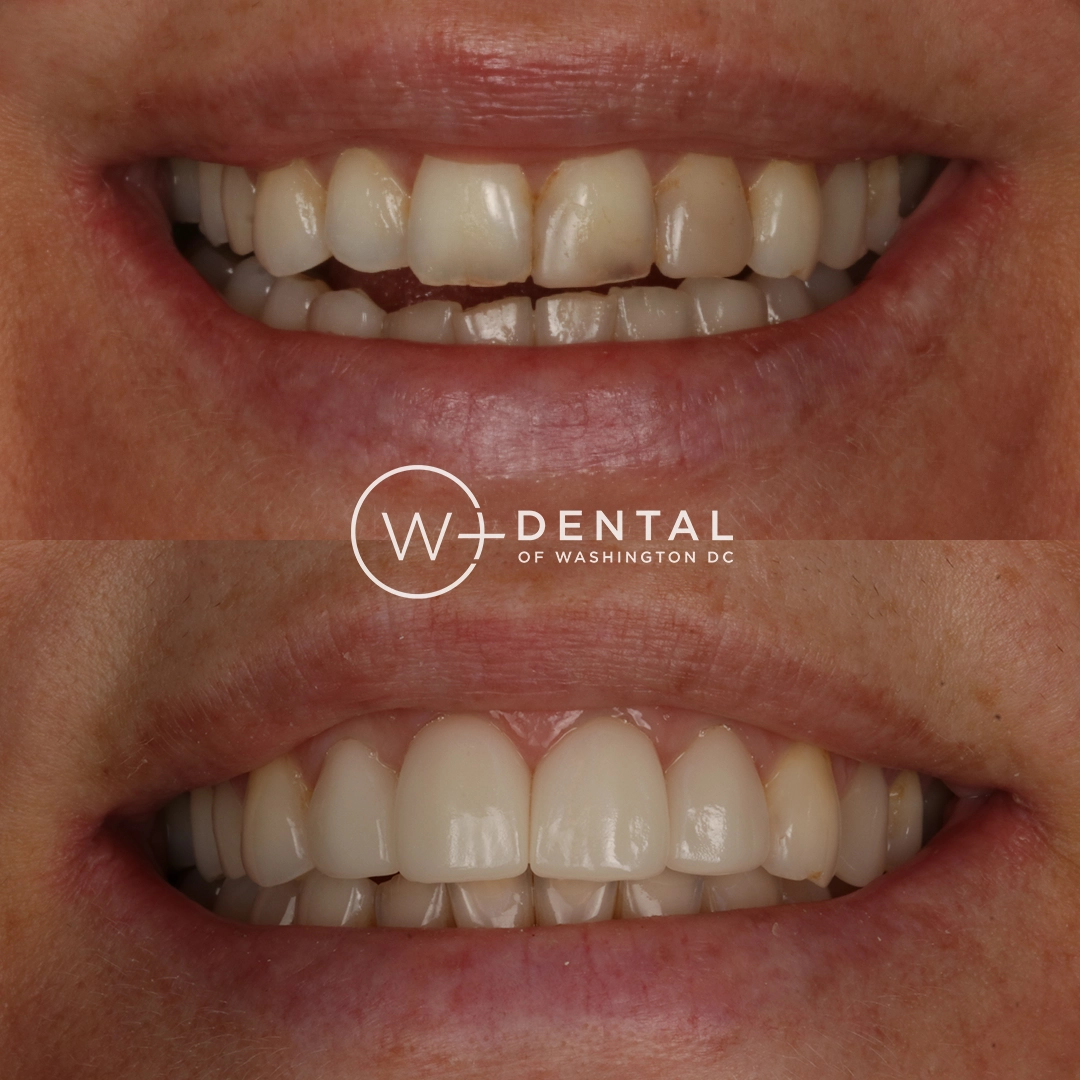
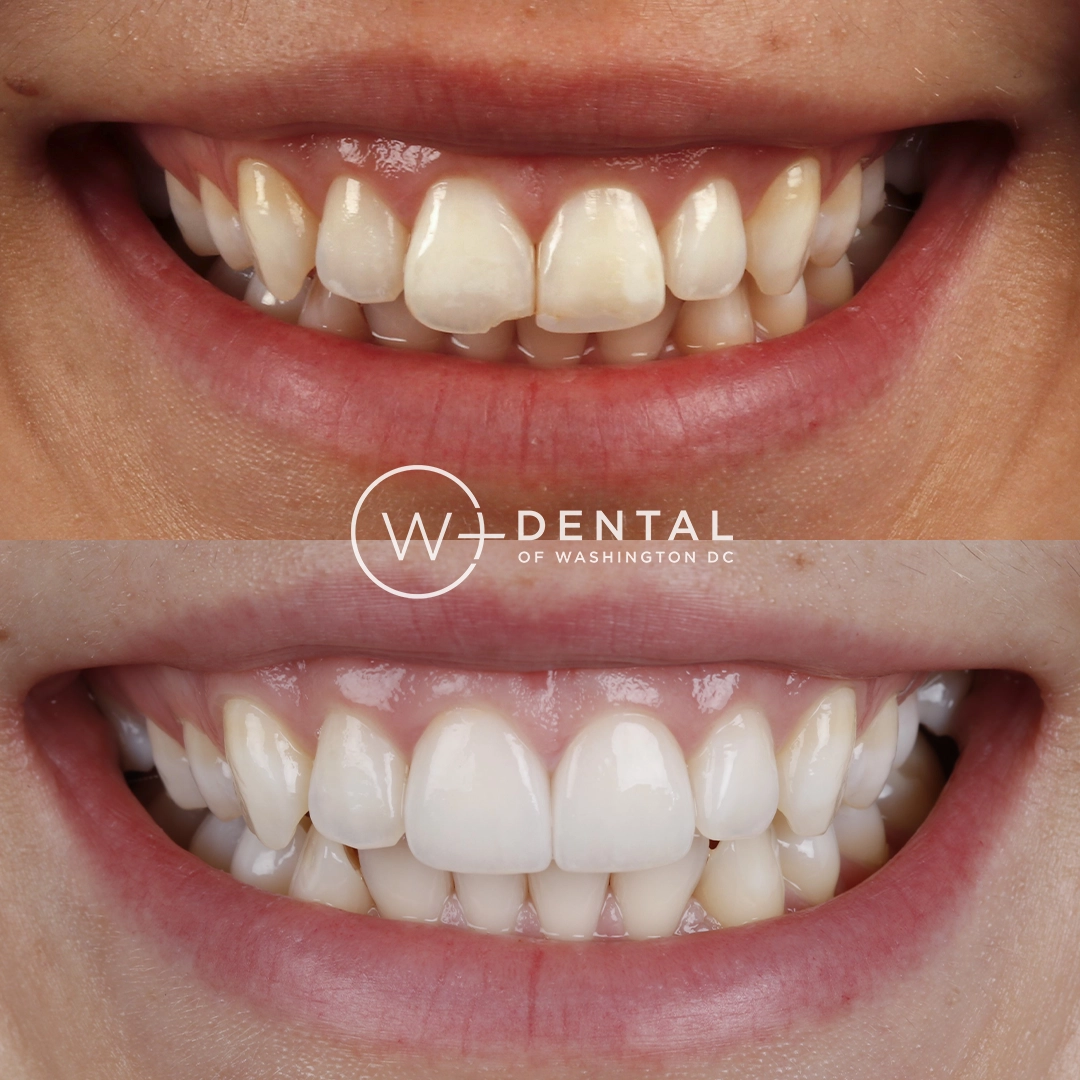
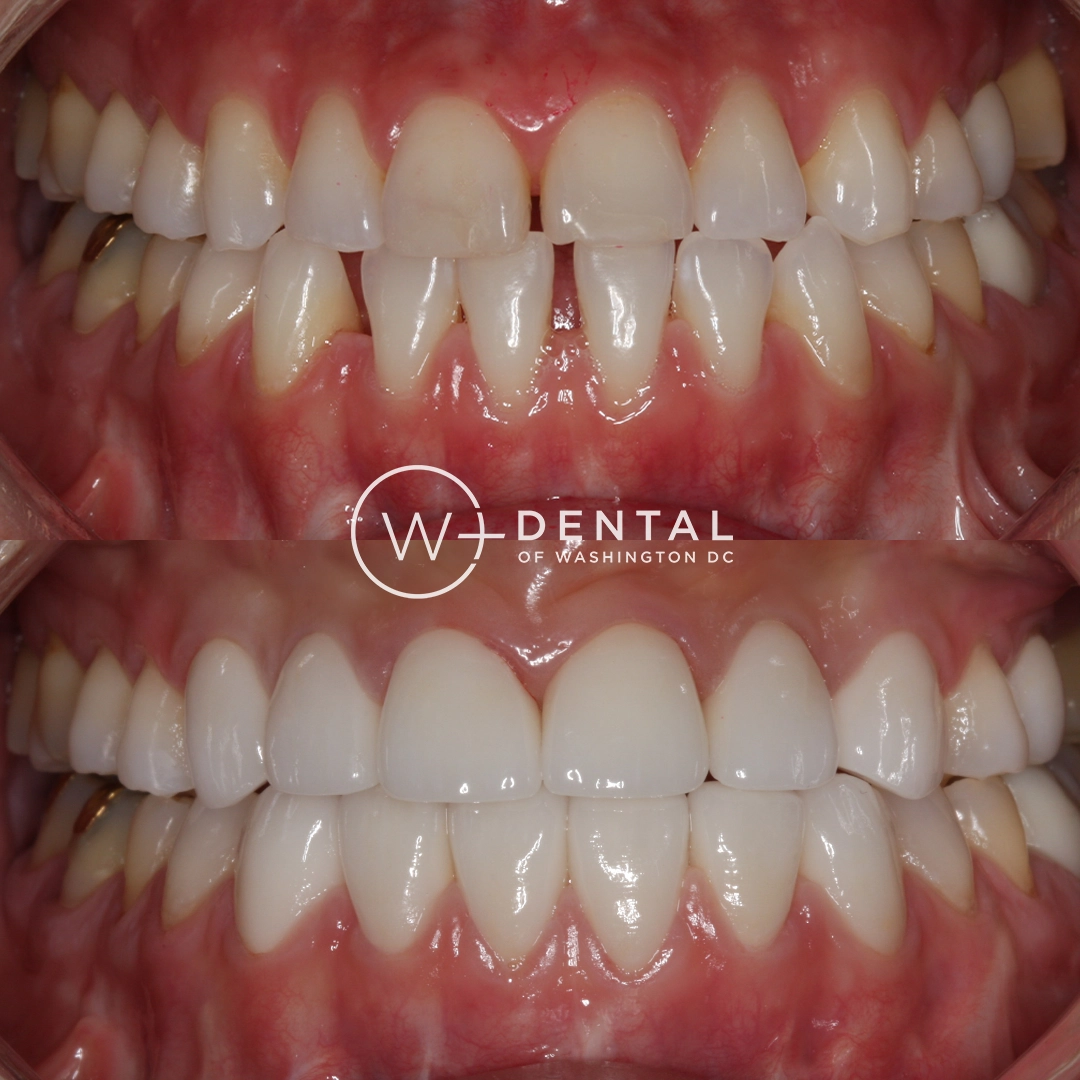
Porcelain and composite veneers can address several common cosmetic dental concerns.
Small chips, irregular edges, and minor surface cracks can make teeth appear damaged or uneven. Veneers can rebuild the visible portion of the tooth and restore a smoother, more symmetrical appearance. A severely fractured or structurally weakened tooth may require a Dental Crown instead of a veneer.
Professional whitening can brighten many types of staining, but certain discoloration may not respond adequately to bleaching. Veneers can cover deep stains, internal discoloration, uneven tooth color, or teeth that have darkened following trauma. Patients with generalized surface staining may also be candidates for Professional Teeth Whitening.
Veneers can close small spaces between teeth by carefully adjusting their visible width and shape. This can create a more continuous and balanced smile without orthodontic treatment in appropriate cases.
Teeth that are narrow, short, pointed, irregularly shaped, or disproportionate to surrounding teeth can affect the overall harmony of a smile. Veneers can improve the shape and proportion of individual teeth so they blend more naturally with the rest of your smile.
Grinding, clenching, age, bite problems, and everyday wear can gradually shorten the front teeth. Veneers may restore lost length and create a fuller, more youthful-looking smile when the underlying teeth remain healthy. Patients with a history of grinding or clenching may also need a custom Nightguardf to protect their natural teeth and veneers.
Veneers can sometimes create the appearance of straighter teeth by improving minor rotations, uneven edges, or irregular tooth shapes. However, veneers do not physically move teeth or correct significant bite problems. Dr. Ku may recommend Invisalign Treatment before veneers when orthodontic movement would create a healthier or more conservative result.
When neighboring teeth have different lengths, shapes, colors, or proportions, the smile can appear unbalanced. A customized veneer plan can create better consistency while preserving natural variations that keep the final result from looking artificial.
Porcelain veneers are thin ceramic restorations custom-made to fit over the front surfaces of the teeth. They are designed to closely reproduce the color, texture, translucency, and light-reflecting qualities of natural enamel. Porcelain veneers are commonly selected for comprehensive smile makeovers because they provide excellent control over tooth color, shape, length, and proportion.
Porcelain veneers may require some enamel reshaping to create a natural fit and prevent the teeth from appearing bulky. Because tooth structure may be removed, traditional porcelain veneers are generally considered an irreversible treatment.

Composite veneers are created from tooth-colored resin that is carefully applied, shaped, and polished directly over the visible surfaces of the teeth. They are sometimes described as direct veneers, resin veneers, composite resin veneers, or composite bonding. A composite veneer typically covers more of the front surface of a tooth than a small bonding repair.
Composite veneers may be an attractive option for patients seeking a conservative and cost-conscious way to improve minor cosmetic imperfections.
Your first appointment begins with a conversation about your smile.Dr. Ku will ask what you like, what you would like to change, and what kind of result you hope to achieve. He will also examine your teeth, gums, bite, and existing dental work.
Digital photographs, scans, X-rays, or other records may be taken to evaluate your teeth and plan your smile. Dr. Ku will determine the appropriate size, shape, position, and color of each veneer. Depending on the case, a mock-up, model, or temporary design may help you visualize the proposed changes.
For porcelain veneers, a small amount of enamel may be reshaped so the restorations fit naturally and do not feel or appear bulky. Digital scans or impressions are then taken so your custom porcelain veneers can be created. Temporary veneers may be placed while the final restorations are being made. When the final veneers are ready, Dr. Ku will evaluate their fit, shape, shade, and overall appearance. Once you and Dr. Ku are satisfied with the design, the teeth are prepared and the veneers are carefully bonded into place. Your bite will be checked and adjusted when necessary.
For composite veneers, they are generally shaped directly on the teeth. Dr. Ku selects a resin shade that complements your smile, applies the material in layers, and carefully sculpts each tooth. The composite is then hardened, refined, and polished to create a smooth, natural appearance. Depending on the number of teeth being treated and the complexity of the case, composite veneers may be completed in one appointment.
A follow-up visit may be recommended to evaluate your bite, gum response, comfort, and satisfaction with the final result. Regular Dental Checkups and Cleanings are important for protecting the veneers and the natural teeth supporting them.
The cost of veneers in Washington, DC depends on your personalized treatment plan. Factors that may affect the cost include:
-Whether you choose porcelain or composite veneers
-The number of teeth being treated
-The complexity of the smile design
-The condition and position of the underlying teeth
-Whether existing bonding or restorations must be replaced
-Whether whitening, Invisalign, crowns, or gum treatment is recommended
An accurate estimate can only be provided after Dr. Ku examines your teeth and discusses your goals. Our team will review the proposed treatment, fees, and available payment options before your procedure begins.
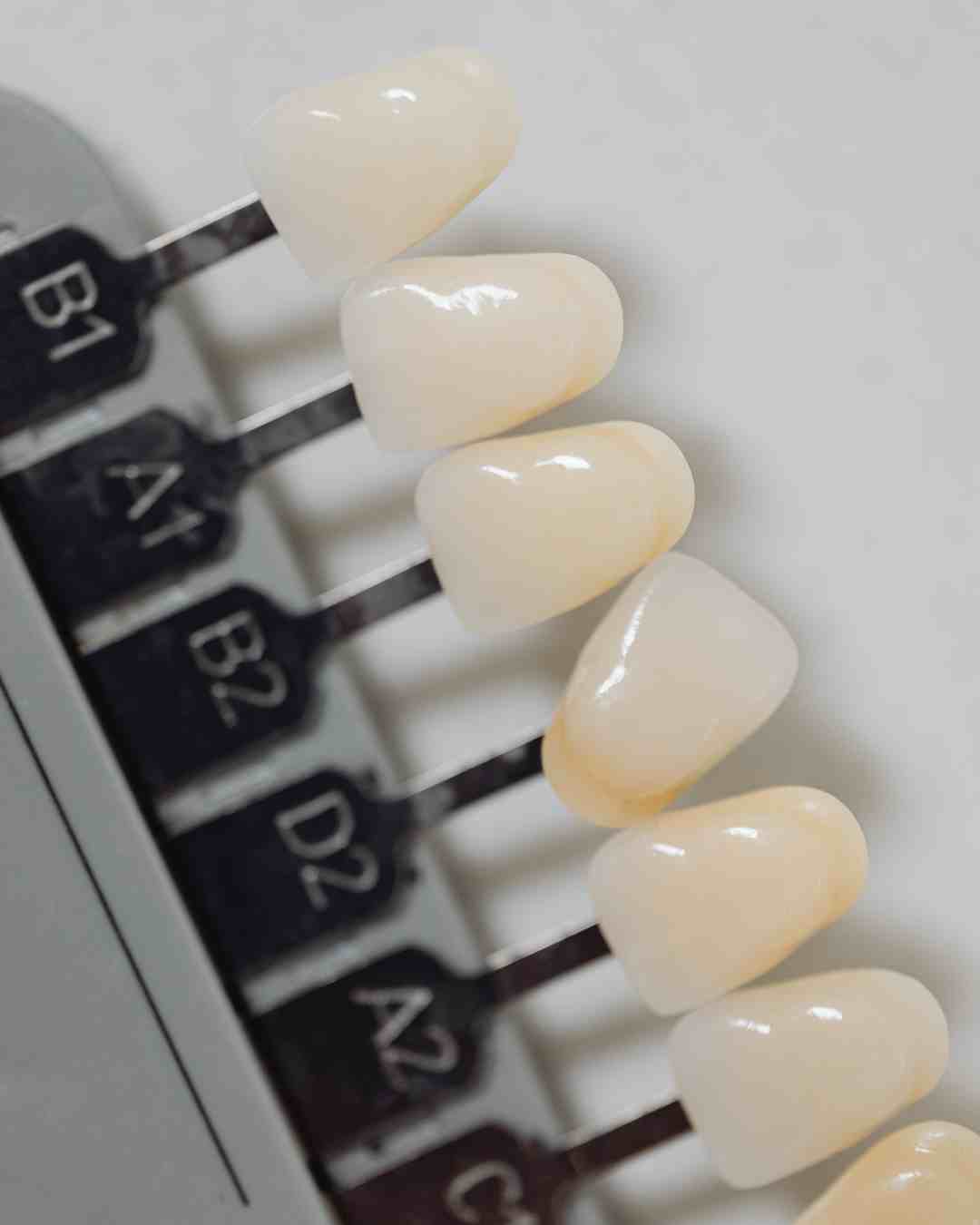
The lifespan of veneers depends on the material used, your bite, oral hygiene, dietary habits, tooth condition, and whether you grind or clench. Porcelain is generally more resistant to staining and wear. Composite may require polishing, repair, or replacement sooner. No veneer should be considered permanent for life.
Traditional porcelain veneers usually require some enamel removal, making the treatment generally irreversible. Composite veneers may require little or no tooth preparation in appropriate cases. Conservative planning and careful treatment are important for preserving as much healthy tooth structure as possible.
Local anesthesia can be used when tooth preparation is required. Some patients experience temporary sensitivity after porcelain veneer preparation or placement, but significant pain is not expected. Composite veneers often require minimal tooth preparation, although each case is different.
Composite veneers may sometimes be completed in one appointment, depending on the number of teeth and complexity of treatment. Porcelain veneers usually require more than one visit because the restorations are custom-made before being permanently bonded.
Veneers are often considered cosmetic and may not be covered by dental insurance. Coverage varies by plan and the reason treatment is needed.Our team can review your benefits and provide an estimate of your expected costs.
Teeth whitening products do not change the color of porcelain or composite veneers. Whitening should generally be completed before the final veneer shade is selected when natural teeth will remain visible.
W Plus Dental welcomes patients searching for a veneers specialist, cosmetic dentist, or smile makeover dentist in Washington, DC. Whether you are searching for porcelain veneers near you, composite veneers in Washington, DC, or a complete smile makeover, Dr. Ku can help you compare your options and create a personalized treatment plan.




We look forward to meeting you. Contact us today to schedule an appointment.
(202) 871-7473Contact@WPlusDental.comMonday-Thursday 8AM - 4PM
Friday8AM - 3PM


