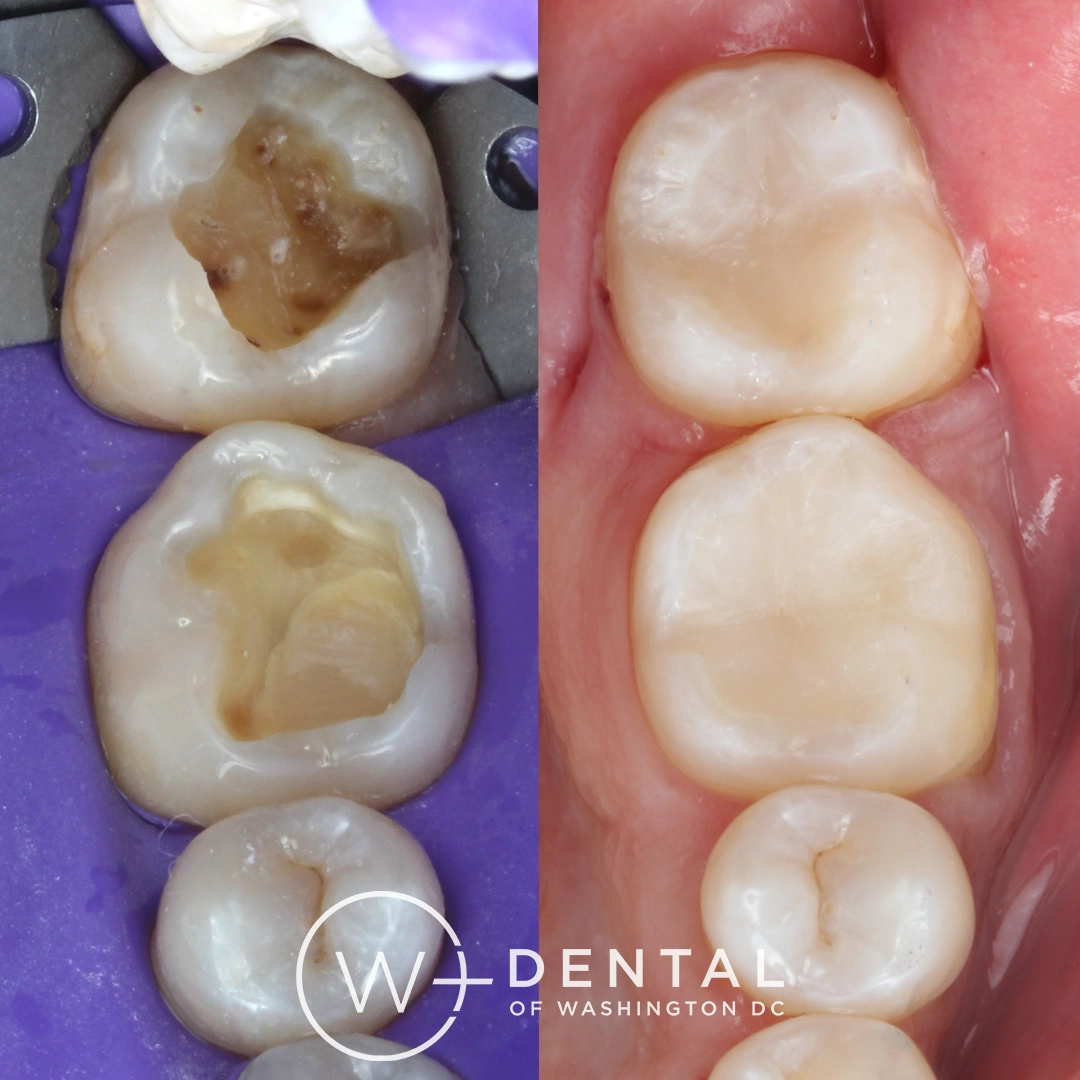
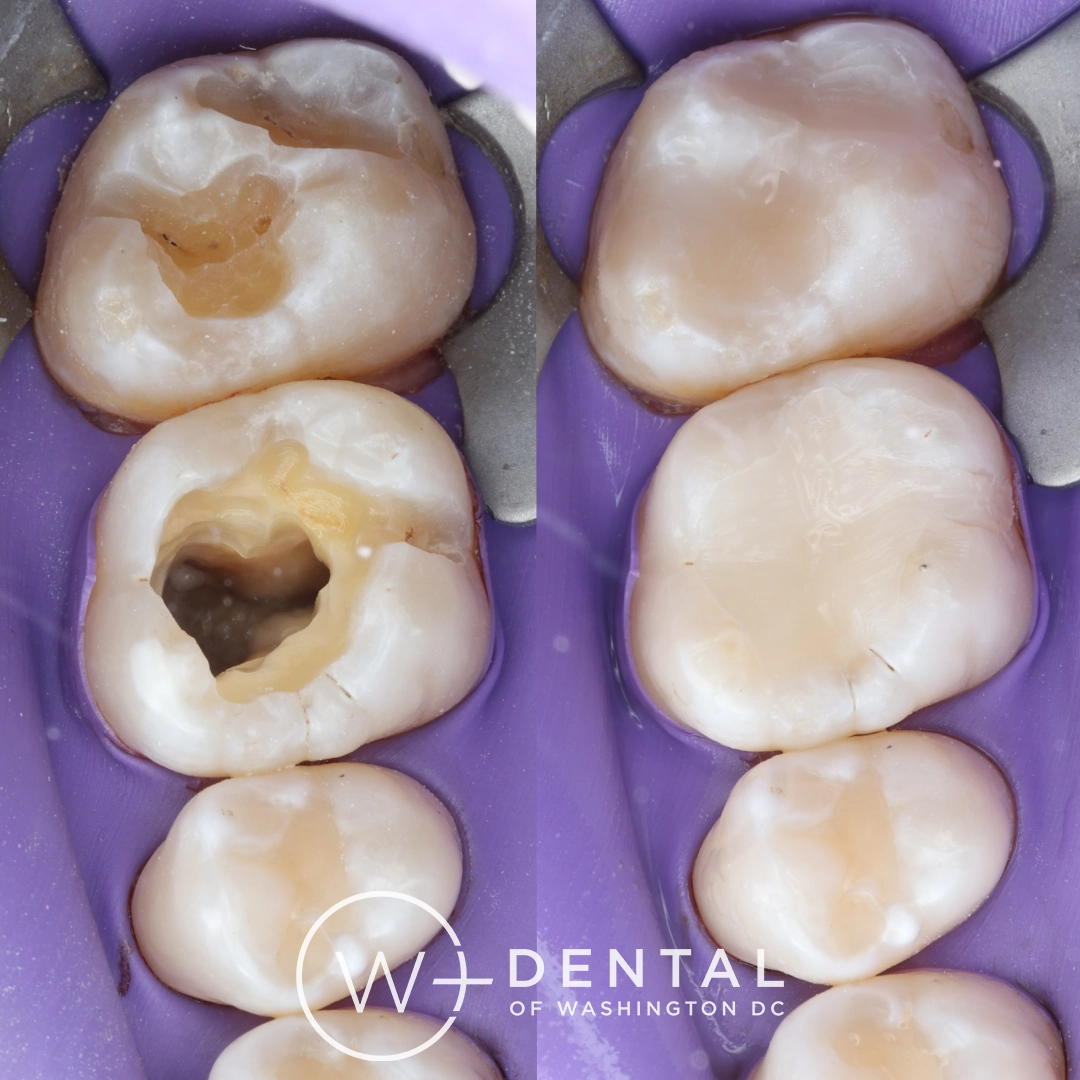
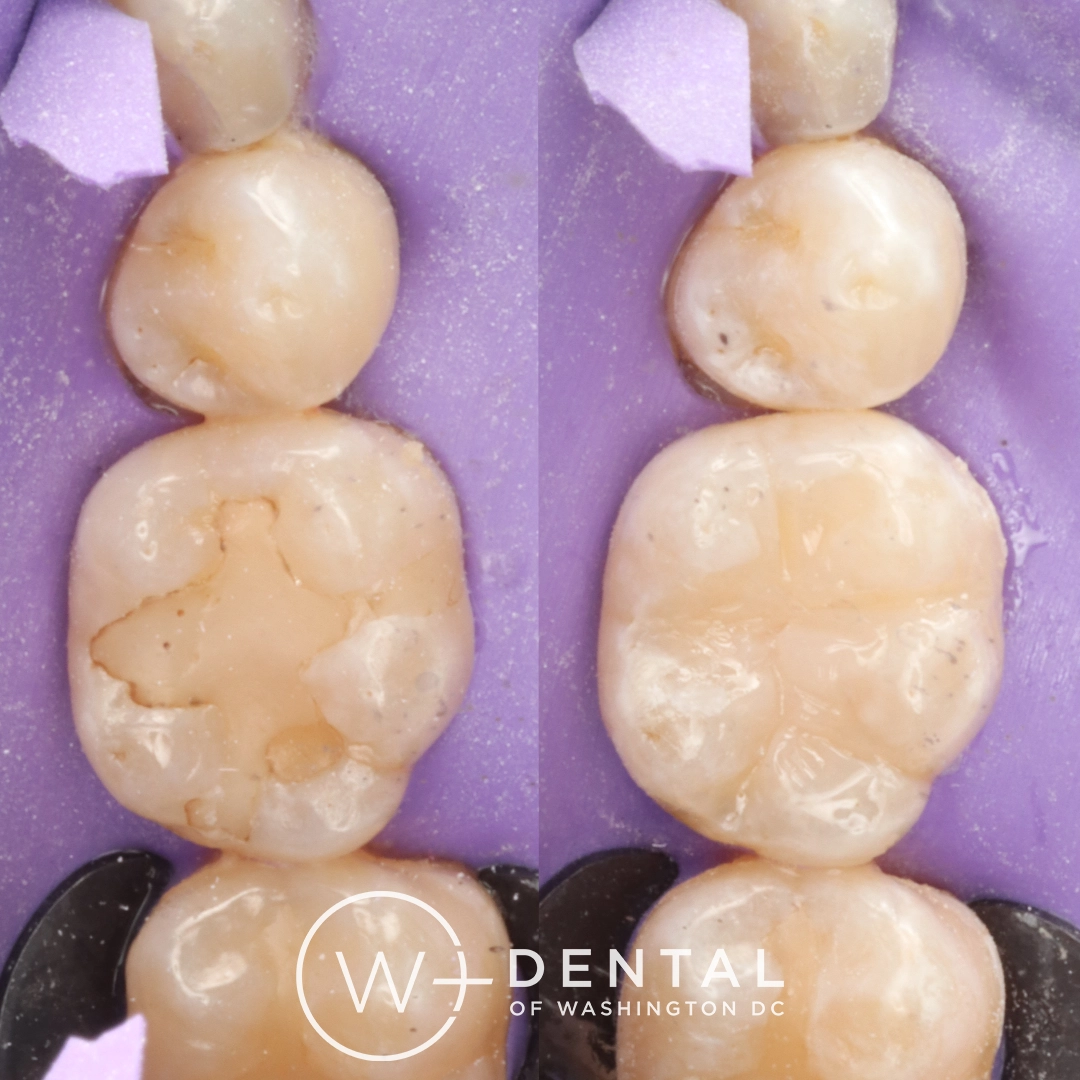
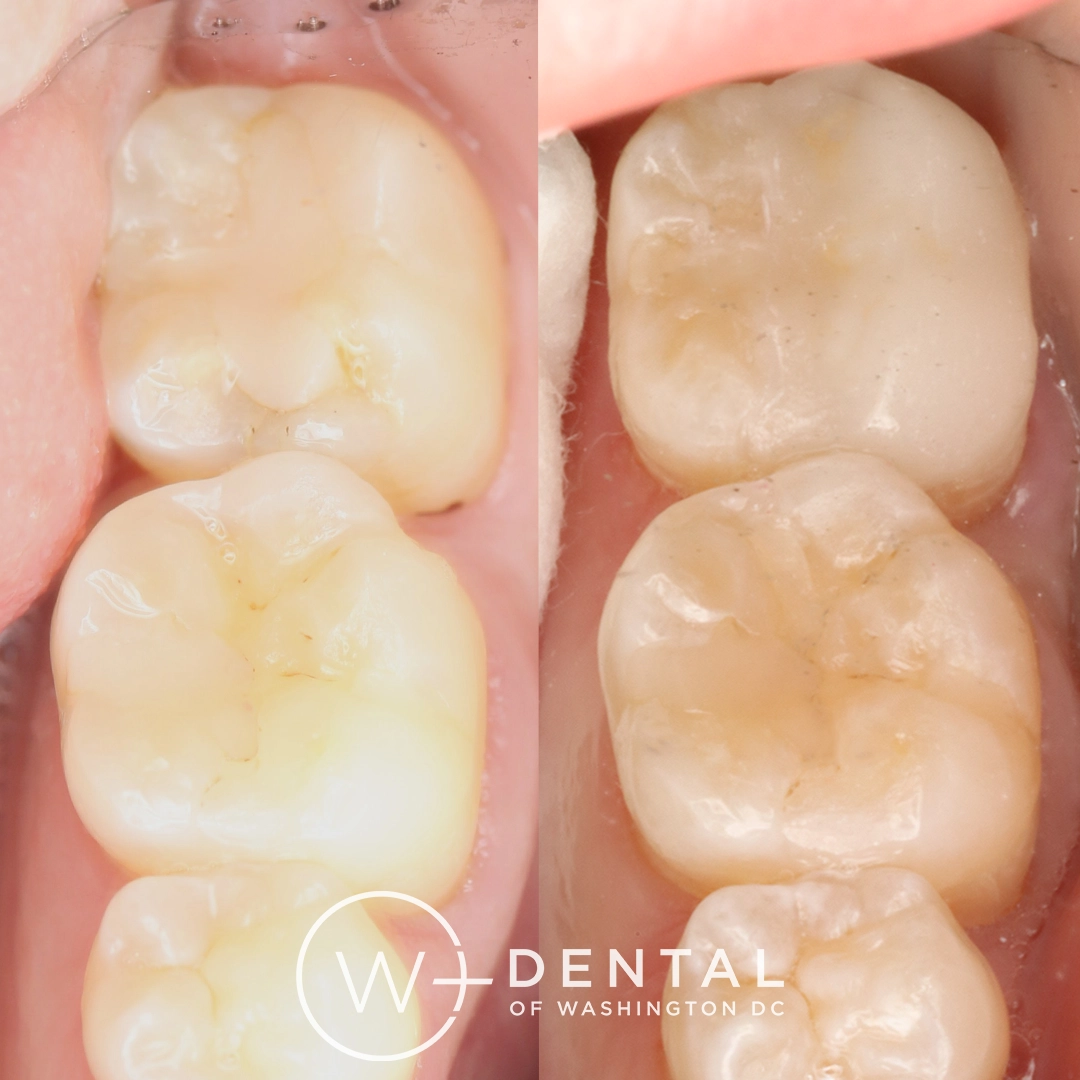
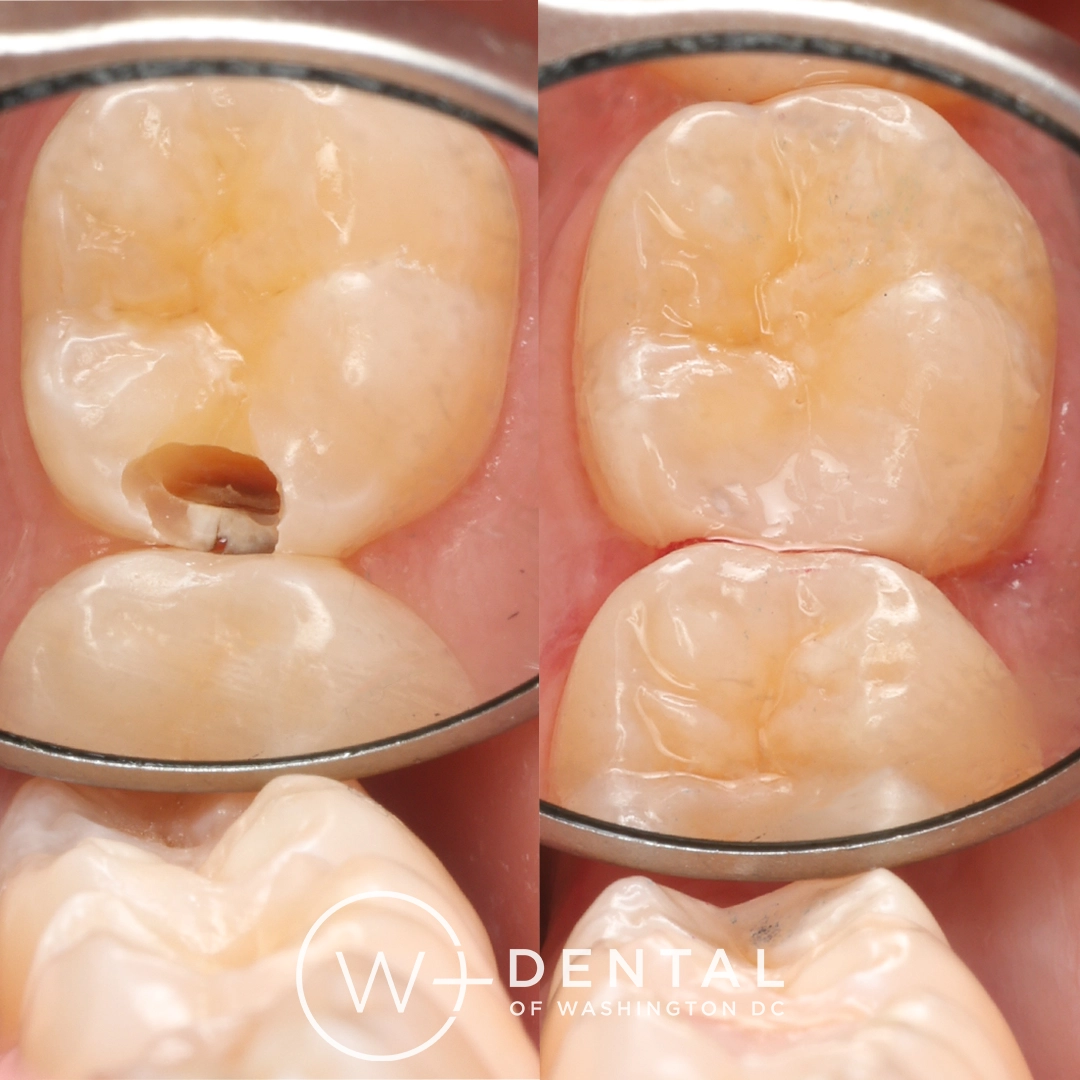
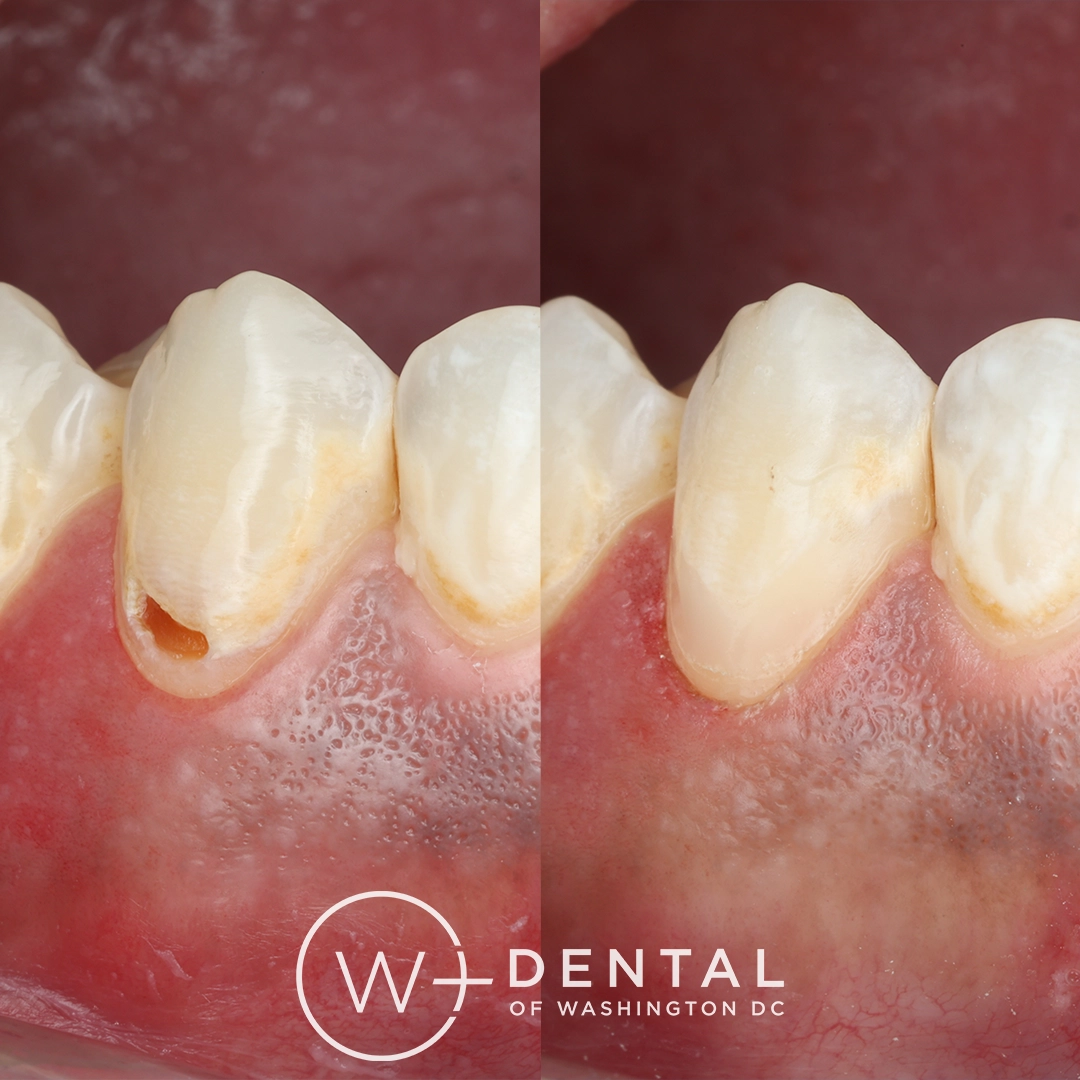
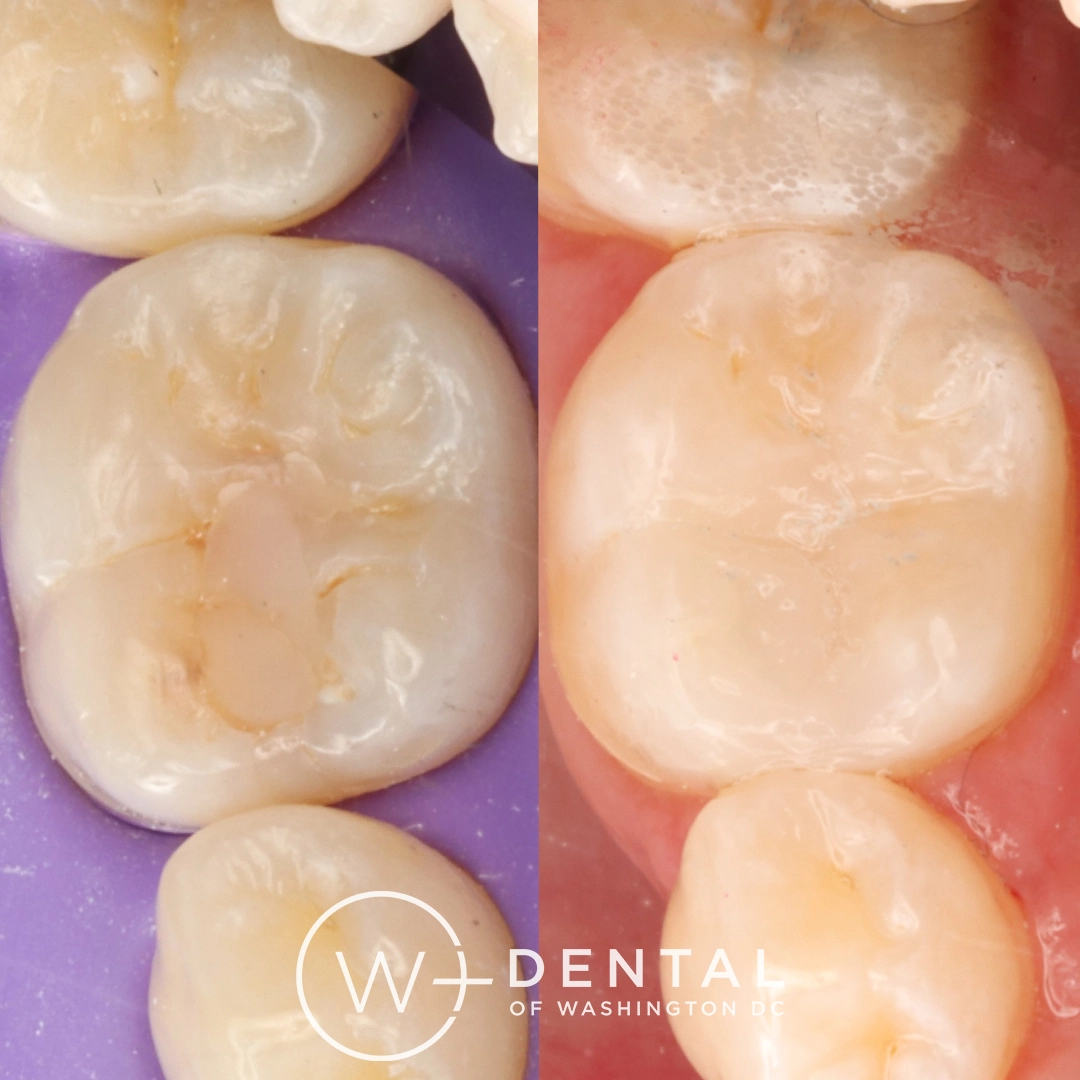
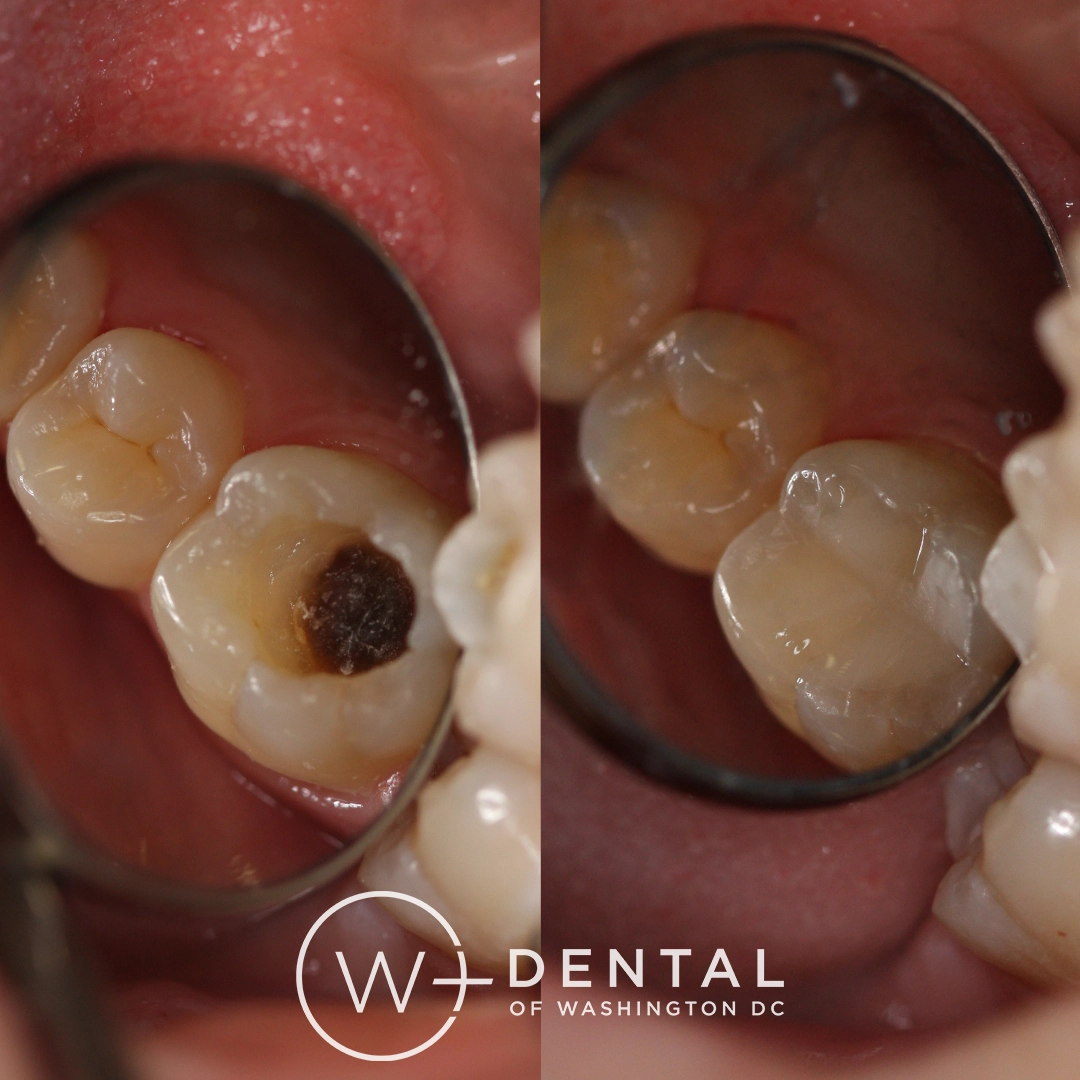
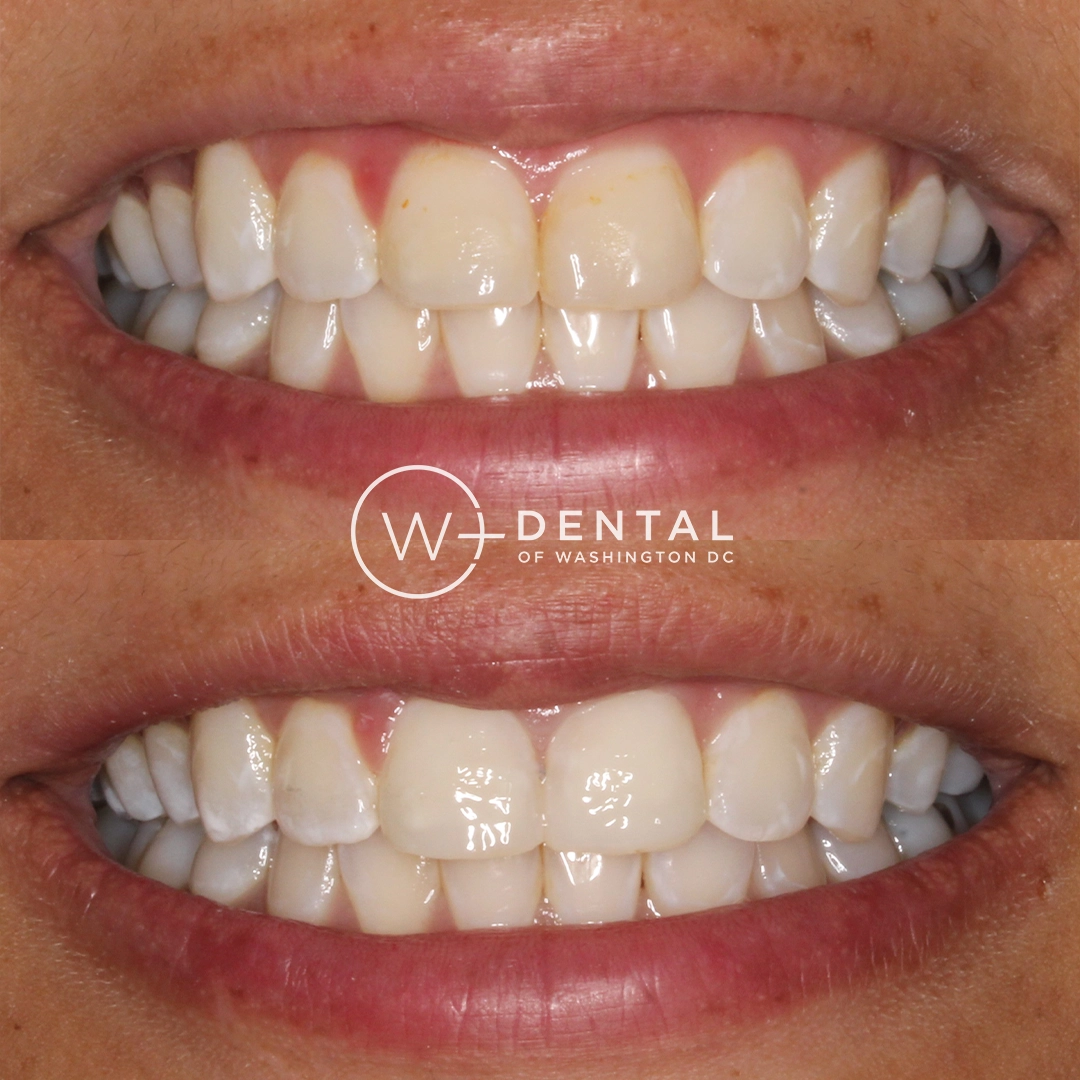
See the transformative results of modern dental fillings and cavity repair in our before and after gallery. From repairing tooth decay and restoring damaged enamel to improving the natural appearance of your smile, our cosmetic and restorative dental treatments are designed to deliver long-lasting, seamless results. Explore real patient transformations and discover how tooth-colored fillings and advanced cavity treatment can restore both oral health and confidence with minimally invasive care.
A cavity is an area of tooth damage caused by decay. Bacteria in the mouth feed on sugars and produce acids that gradually weaken and break down the enamel. As the damage progresses, the decay may move deeper into the tooth and cause sensitivity, pain, infection, or structural weakness. A dental filling is used to remove the decayed portion of the tooth and restore the remaining structure. Treating a cavity early may help preserve more of the natural tooth and reduce the risk of needing a crown, root canal, or extraction.
During cavity treatment, Dr. John Ku carefully removes the decayed and damaged tooth structure. The area is cleaned and prepared before a tooth-colored filling material is placed, shaped, and polished.
The final filling is designed to:
The filling is customized to fit the tooth and match its natural color as closely as possible.
W Plus Dental uses tooth-colored composite fillings to repair many cavities. Composite resin can be matched to the shade of the surrounding teeth, making it a discreet option for both front and back teeth.
Unlike traditional silver amalgam fillings, composite fillings are designed to blend with the natural enamel. The material bonds directly to the tooth and can often be placed while preserving more healthy tooth structure.
Tooth-colored fillings may be used for:
Some cavities cause noticeable symptoms, while others are only found during an examination or dental X-ray. Schedule an appointment if you notice:
Regular dental checkups allow cavities to be detected and treated before they become larger or more painful.
A cavity does not heal on its own. Without treatment, tooth decay can continue spreading through the enamel and into the deeper layers of the tooth.
An untreated cavity may eventually lead to:
Early cavity repair is usually simpler and more conservative than treating advanced decay.
Dental fillings can wear down, crack, leak, or become damaged over time. An older filling may also leave the tooth vulnerable to new decay around its edges.
Dr. Ku may recommend replacing a filling if it is:
Replacing an old filling can help protect the tooth while improving its appearance and function.
Dr. John Ku provides personalized cavity treatment and restorative dentistry at W Plus Dental in Washington, DC. Every filling is carefully planned based on the size of the cavity, the location of the tooth, the patient’s bite, and the amount of healthy tooth structure remaining.
Dr. Ku focuses on removing the decay, preserving as much natural tooth structure as possible, and creating a smooth, natural-looking restoration that feels comfortable when chewing.
Tooth-colored filling material is selected to blend with the surrounding enamel. The restoration is carefully shaped and polished to create a seamless appearance.
When possible, Dr. Ku removes only the damaged portion of the tooth and preserves the healthy structure.
Every cavity is different. Your treatment plan will be based on the size, location, and depth of the decay, as well as your overall dental health.
Digital X-rays and modern diagnostic tools help detect cavities that may not be visible during a routine examination.
W Plus Dental provides preventive, restorative, cosmetic, implant, and emergency dental care in one Washington, DC office. If a cavity requires more extensive treatment, your care can be coordinated with a dental crown, root canal, or other restorative procedure.
Yes. Small and moderate cavities can often be treated with a dental filling. The decayed portion of the tooth is removed and replaced with restorative material.
Tooth-colored composite fillings are designed to closely match the surrounding enamel. When carefully placed and polished, they can blend naturally with the tooth.
The treatment area is typically numbed with local anesthesia before the cavity is repaired. You may feel pressure or vibration during the procedure, but the tooth should remain comfortable.
Many dental fillings can be completed during a single appointment. The exact time depends on the size and location of the cavity and the number of teeth being treated.
The lifespan of a filling depends on its size, location, the patient’s bite, oral hygiene, and habits such as grinding or chewing hard objects. Regular dental checkups allow the filling to be monitored over time.
Yes. A filling may loosen or fall out because of wear, decay, trauma, grinding, or biting into something hard. A missing filling should be evaluated promptly to protect the exposed tooth.
A cavity cannot return inside the filling material, but new decay may develop around the edges if plaque accumulates or the filling becomes damaged.
Yes. Cavities commonly develop between teeth where food and plaque can collect. These areas may only be visible on dental X-rays.
It depends on how much healthy tooth structure remains. A large cavity may require a dental crown instead of a filling to provide greater strength and protection.
Not every cavity requires a root canal. Root canal treatment may be needed when decay reaches the pulp or causes infection or nerve damage.
The cost depends on the size of the cavity, the tooth being treated, and the type of restoration needed. W Plus Dental can provide a personalized estimate after examining the tooth.
Brush twice daily with fluoride toothpaste, floss every day, limit frequent sugary snacks and drinks, and maintain regular dental exams and professional cleanings.
A cavity may start small, but it can become more difficult and costly to treat as the decay progresses. Early treatment can preserve more of your natural tooth and help prevent pain, infection, and further damage.
Schedule an appointment with Dr. John Ku at W Plus Dental in Washington, DC. Our team will evaluate your tooth, explain your treatment options, and provide a natural-looking restoration designed to protect your smile.




We look forward to meeting you. Contact us today to schedule an appointment.
(202) 871-7473Contact@WPlusDental.comMonday-Thursday 8AM - 4PM
Friday8AM - 3PM